Just Smile

AI-powered preventative oral health support

Project status: Startup
Problem

Dental care is reactive: cost, anxiety, and access barriers delay action until problems escalate.

Product Strategy

Positioned JustSmile around prevention, habit formation, and AI guidance: not diagnosis.

Approach

Four product decisions balanced behavior change, trust, onboarding friction, and homepage clarity.

Outcome
  • $1,000 Gebhardt Sandbox Fund secured
  • Validated trust + habit hypotheses
Role
Product Designer + Product Manager
Timeline
8 months · October 2026–present
Team
4 · Design · Engineering · Business
Tools
Cursor · Claude · Vercel

Problem

Dental care is often reactive, expensive, and delayed.

Pain, cost, uncertainty, and limited access often push people to seek care only after problems escalate.

72M

Americans lack dental insurance

$1.6B

spent annually on preventable emergency dental visits

9.6M

Americans have traveled abroad for dental care

  1. Limited access
  2. Delayed care
  3. Emergency treatment
Design constraints

Balancing prevention, trust, and healthcare regulations required navigating five constraints.

TrustRegulationBehavior
Image qualityAccessibility

Research

What prevents people from acting earlier?

To understand where preventative support breaks down, we explored three questions:

  1. What solutions already exist?
  2. What do users struggle with?
  3. Where are opportunities to intervene?
Competitive landscape

AI Dental Tools

Most products assumed users already had access to care.

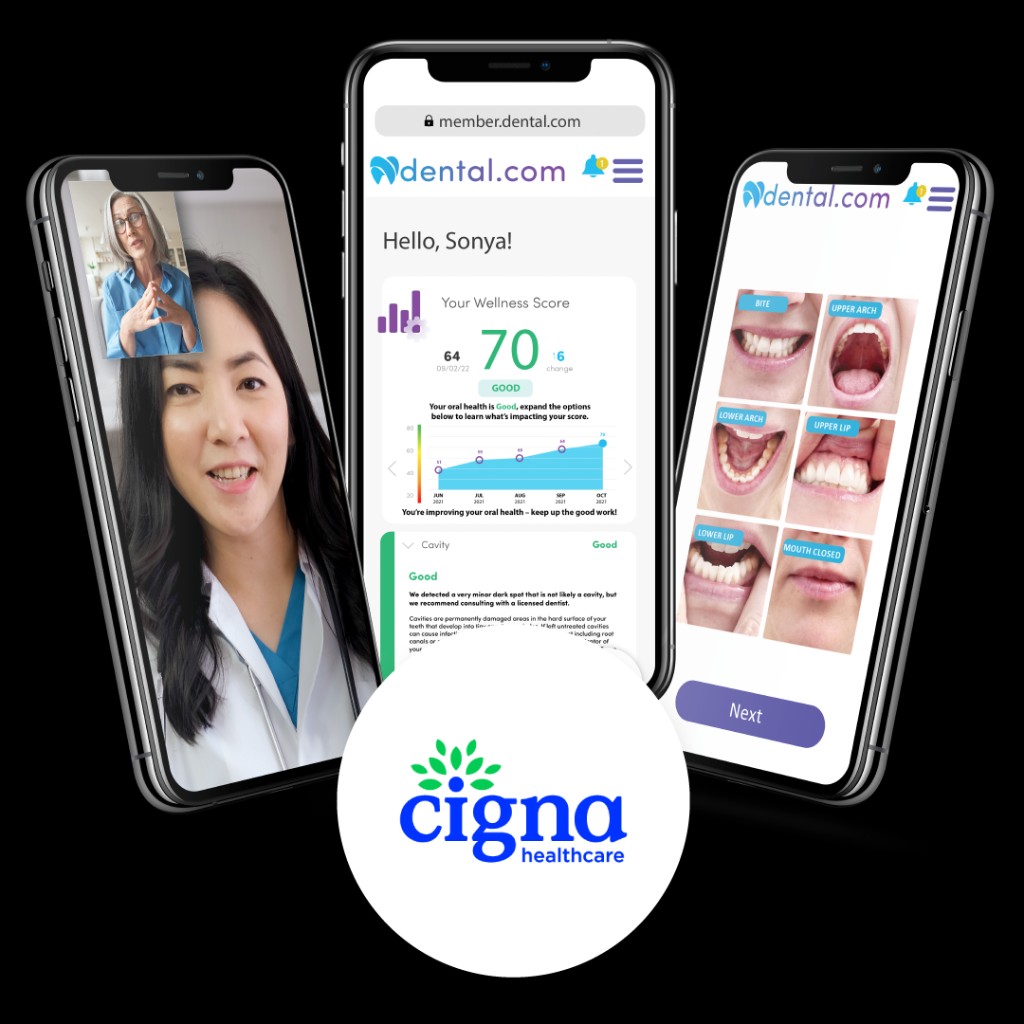
Dental.com, Cigna SmartScan, and DentalMonitoring focused on monitoring and treatment rather than prevention.

  • Dental.com logo
  • Cigna Healthcare SmartScan dental app showing wellness score and photo assessment screens
  • DentalMonitoring logo

Behavior Design

Habit-building products showed how small rewards create long-term engagement.

Flo, Finch, and Toothy used low-friction onboarding, habit loops, and positive reinforcement to support repeated use.

  • Flo app icon
  • Finch app logo
  • Toothy app icon
What users told us
Participant feedback: I’d trust it more if there was data behind it. I’m not sure I could take a good picture of my teeth. I usually wait until it hurts.
Key findings
  1. Cost and uncertainty delayed care

  2. Trust shaped willingness to use AI

  3. Habit-building felt easier than treatment

  4. Users wanted actionable next steps

Opportunity space

Opportunity: affordable prevention, behavior reinforcement, low-stakes AI guidance, and support outside clinics.

  • Affordable preventative care
  • Behavior reinforcement
  • Low-stakes AI guidance
  • Support outside clinics

Key Decisions

  1. Habit formation requires positive reinforcement

    Tooth characters celebrate progress and make preventative care feel more approachable than traditional dental experiences.

    JustSmile tooth character system showing Scan, Habits, Coach, and Monitor roles
  2. Colors can build trust before the first interaction

    Dental branding research highlighted blue as a signal of trust and professionalism, while green reinforced health and prevention. We used both as foundational colors, then reserved orange and purple for monitoring and guidance.

    JustSmile color system diagram showing blue, green, violet, and orange with their roles in the product
  3. Reducing friction starts before the first scan

    Research showed that lower commitment experiences encouraged engagement, so onboarding focused on goals and habits before introducing AI features.

  4. People need to know what to do next

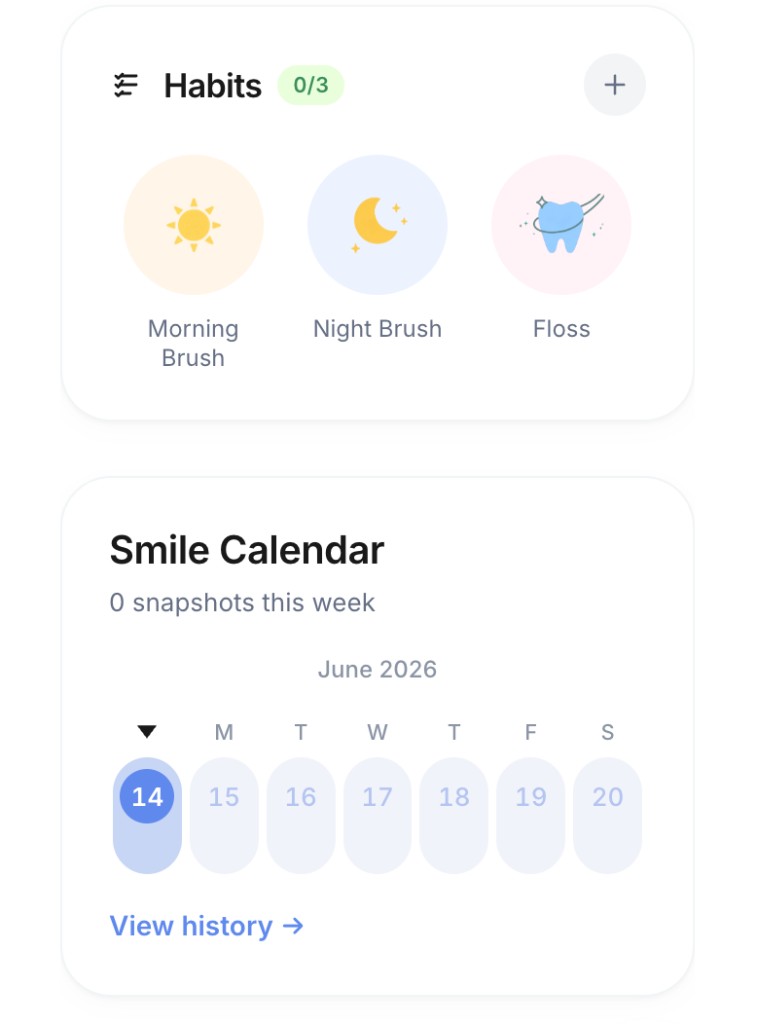
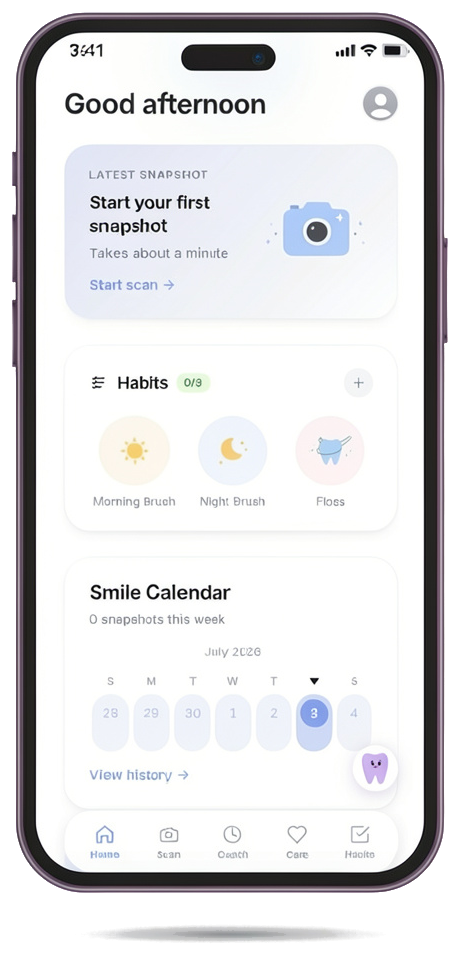
    Users opened JustSmile looking for reassurance or direction, so the homepage prioritized their latest Smile Snapshot, followed by habits, progress, and coaching resources.

    JustSmile homepage showing latest Smile Snapshot, daily habits, Smile Calendar progress, and Smile Coach entry point

Solution

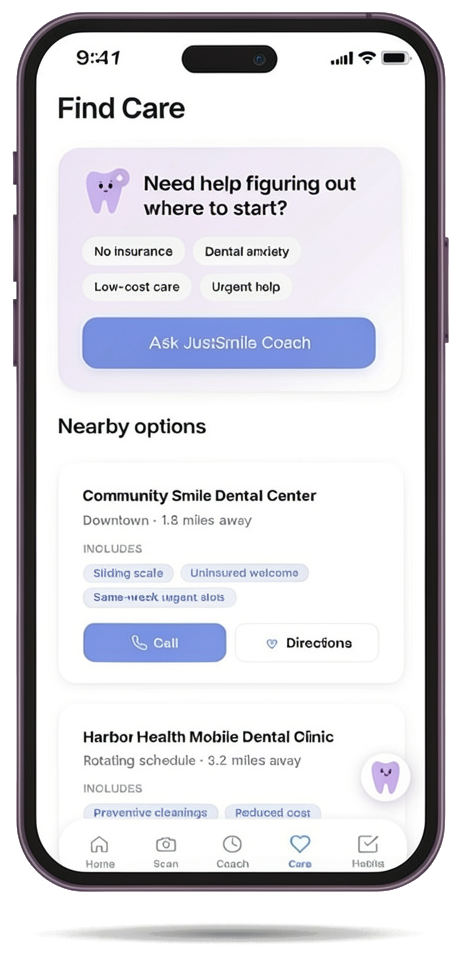
JustSmile combined AI screening, habit formation, and preventative guidance into one experience.

Help users spot changes earlier.

Encourages action before symptoms become emergencies.

Impact

Testing validated trust and habit hypotheses

Early prototypes were tested with dental experts and potential users to evaluate onboarding, scanning, and habit engagement.

Tested with a dental hygienist, a former dentist, and potential users.

  1. Users questioned scan accuracy.

    Added reassurance around scan limitations and reframed results as guidance, not diagnosis.

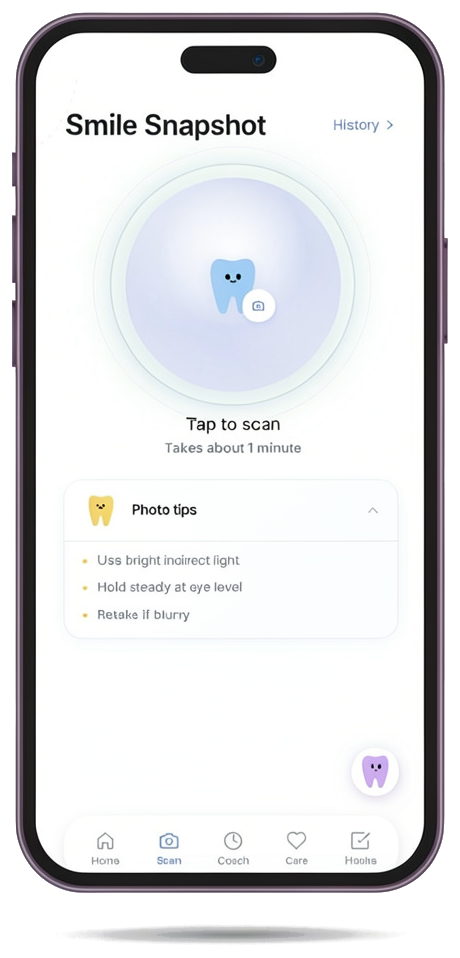
  2. Photo quality felt difficult.

    Added clearer image capture guidance before scanning.

  3. The brushing coach resonated strongly.

    Prioritized habits earlier in the experience and strengthened routine-based onboarding.

Funding secured

$1,000 Gebhardt Sandbox Fund

Awarded to continue validating preventative oral health support.

What's next

JustSmile is an ongoing project. Current efforts focus on improving AI reliability and exploring pathways to real-world adoption.

  • Improve scan accuracy with public dental datasets

    I'm exploring publicly available oral health datasets to evaluate and improve AI-assisted screening accuracy.

  • Make AI guidance more transparent

    Future versions could better explain why recommendations are made, helping users build trust without relying on clinical language.

  • Explore partnerships for pilot programs

    I'm beginning conversations with organizations such as Pitt Dental to explore sponsorship, testing, and preventative care initiatives.